Success Stories
Learn from these in-depth Case Studies how our clients have benefited from Martin Engineering products and services. We thank them for sharing their experiences!

Martin® Air Cannon Improves Cleaning Efficiency
The JK Lakshmi Cement plant in Northwestern India was experiencing excessive buildup in the clinker cooler, creating "snowmen" when molten clinker didn't flow properly from the kiln to the cooling conveyor.
Read More
Vibration Technology Improves Material Flow, Aids Worker Safety In Vactor Manufacturing Trucks
The ability to quickly and completely evacuate the debris hopper raises productivity, while avoiding the need for worker intervention to successfully empty the entire load. The effectiveness of the technology from Martin Engineering’s Cougar® line of vibrators is so well recognized that every industrial vacuum loader is specified with a 12V unit installed as standard equipment.
Read More
Hibbings Public Utilities Puts a Lid On Dust in Biomass Facility
A Minnesota power generating facility has completed the first phase of a program to drastically reduce dust and spillage, helping to prevent fugitive material from reaching nearby homes and businesses. The complex project included belt cleaners, new transfer points and modified chutes, settling zones and apron skirts, as well as vibration technology to improve material flow at key points.
Read More
Air Cannons Boost Material Flow, Eliminate Biomass Boiler Fouling at Koda Energy
An innovative Minnesota energy company has eliminated labor-intensive air lancing to clean biomass ash from boiler walls by installing a series of high-powered air cannons to dislodge accumulations and restore process flow. The air cannon network at Koda Energy helps the facility avoid the daily shutdowns and maintenance hours that manual cleaning required, allowing the facility to run at its rated capacity.
Read More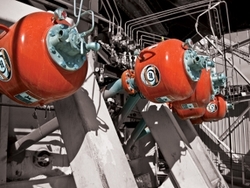
Advanced Air Cannon Design Improves Material Flow At Votorantim Cimentos
Company officials were aware that air cannons had proven themselves in cement plant applications, helping manufacturers eliminate build-ups in preheater towers, riser ducts, feed pipes, silos and cyclones. They contacted Martin Engineering to conduct an audit, and a joint effort was developed to determine the optimum solution, including air cannon design, nozzle selection and specific locations to best achieve the firm’s goals.
Read More
Air Cannons Remove Ash Buildup in Midwest Generating Facility SCR
The facility is a 205 MW coal-fired plant that came online in 1970. Upgrades have been made throughout its lifespan, including a 1990 conversion to blend low-sulfur coal with local supplies to comply with new clean air standards. In 2007, the company added a sophisticated SCR system to further reduce NOx emissions, an investment larger than the cost to construct the plant originally.
Read More
Arcelor Mittal Uses Air Cannons to Remove Build-Up
During the rainy season, Arcelor Mittal noticed an increased buildup in the bulk material handling processes at the Lazaro Cardenas plant. Accumulation was forming on the walls of the hoppers, causing a continual headache for operating personnel and a consistent bottleneck in the production process. To knock down the buildup, operators resorted to hitting the vessel walls with heavy tools in an effort to dislodge the buildup from outside the vessels.
Read More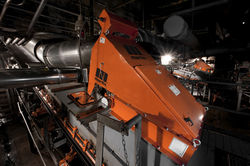
Containment Made Simple Through Cutting-Edge Transfer Point Design
Transfer points can be problematic for any coal-handling operation. With loads of material rapidly dropping through receiving chutes onto a receiving conveyor with great force, material piles up around the frame and dust wanders throughout the area, collecting on idlers, pulleys and floors – affecting air quality. Workers are tasked with constantly cleaning up the material before it encapsulates the belt.
Read More
Conveyor Retrofit Improves Material Transfers, Reduces Spillage at NIPSCO
Efficient material flow is a critical element of dry bulk handling, and fugitive material accumulation can have a significant effect on a plant’s profitability. Spillage around conveyors and transfer chutes is a waste of material, typically requiring labor-intensive cleanup that raises maintenance expenses and diverts manpower from core activities, in some cases introducing safety risks for personnel.
Read More
Conveyor Upgrade Resolves Dust & Spillage at Coeur Rochester Mine
During plant construction, most conveyor systems were specified by determining the capacity and meeting the minimum codes and safety requirements, with a focus on the lowest construction cost. Instead, Martin’s approach examines every detail for opportunities to make conveyors safer, more productive and better able to contain fugitive material. And the concept can be applied to new systems or retrofitted to existing designs.
Read More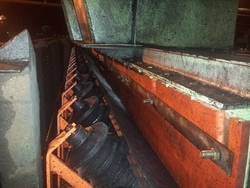
Conveyor Upgrades At Sasol Synfuels Reduces Coal Spillage
One of South Africa’s oldest manufacturers of synthetic fuels, lubricants and chemicals needed products that would prevent spillage and small particles from escaping the material flow. The new components are proving effective at containing fugitive material, minimizing safety hazards and lost production time, while significantly reducing maintenance and wash water usage.
Read More
Conveyor Wash Boxes Reduce Dust & Maintenance Time at Midwestern Utility
To reduce maintenance and better control fugitive material, an innovative power supplier has installed customized wash boxes on its coal conveyor belts, slashing cleanup time while drastically reducing surface dust and airborne particles. Believed to be the first wash boxes used successfully on the tripper floor of a PRB coal operation in the U.S., the units have now been installed in six locations within the company’s network.
Read More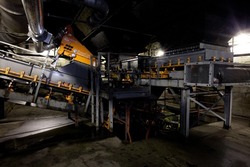
Upgrades Make OPPD a Leader in PRB Coal Safety
While containing less sulfur, PRB coal contains more water, generates less heat and burns less efficiently than the type of coal it replaced. In fact, though overall emissions have been reduced, the plant now requires more through-put to ensure the same generating capacity. Even more vexing, due to several of the inherent properties of PRB coal, it is prone to sudden, spontaneous combustion.
Read More
Drake Cement Plant Boosts Material Flow With PLC-Controlled Air Cannons
Efficient material flow is a key component of Drake’s dry-process manufacturing, and accumulation in storage bins, process vessels or feed pipes could choke even this well-designed system. Blockages can create expensive obstacles to equipment performance and process efficiency, raising maintenance expenses and diverting manpower from core business activities, in some cases introducing safety risks for personnel.
Read More
Engineered Transfer Chutes Help Superior Midwest Energy Terminal Maintain High Volume Coal Handling
Company officials wanted to upgrade the material handling system to improve throughput and eliminate flow issues, they knew it was going to take some creative thinking, as the terminal’s ambitious loading schedule limits the opportunities for maintenance and equipment changes. Downtime is scarce, with maintenance and system upgrades handled during annual mid-January and February system maintenance outages.
Read More
Engineered Vibration Helps Humphries Haulage Improve Efficiency and Safety
An haulage company is cutting its tipping time in half by using a high-performance truck vibrator to more efficiently empty dump beds. The client reports faster turnarounds and an ability to make more runs per day, while improving safety by avoiding the need for manual cleanout. Company officials have also cited reduced stress on truck brakes and body mounts among the benefits.
Read More
Enhancing Air Cannon Performance & Nozzle Design
Efficient material flow is a vital element to profitability. Hang-ups in storage systems and buildups in process vessels can choke material movement, causing bottlenecks that create expensive complications to equipment performance and productivity. Poor material flow also increases maintenance expenses, deterring manpower from fundamental tasks.
Read More
GCC Takes Control of Fugitive Material
Like most cement manufacturing sites, GCC Dakotah employs an extensive conveyor system to handle raw materials and move finished product. In keeping with its long-range plans to employ industry best practices for bulk handling and fugitive material control in its plants, company officials conducted an extensive assessment of the conveyors in early 2013. It was determined that significant upgrades could be made.
Read More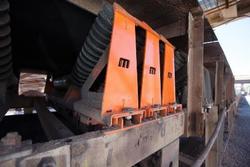
High-Speed Impact Cradle Cuts Downtime, Improves Serviceability at AZ Mine
A new high-speed impact cradle has solved problems with roller and frame damage from heavy conveyor loading conditions at an Arizona mine-for-leach copper mine, where two open pits feed a crushing facility with a capacity of 103,000 metric tons per day. The customer estimates that the new cradles from Martin Engineering paid for themselves in just the first week of service, due to the savings in maintenance and downtime.
Read More
Hurricane Season at Akçansa Büyükçekmece
Literally the pioneer in alternative fuel use in Turkey’s cement industry, the plant was issued the country’s first license for its process in 2005, the same year that it installed a special self-built tire feeder. The current fuel ratio is approximately 77% pet coke and 23% alternative fuels, including waste oil, refuse-derived fuels (RDFs), tires, industrial plastics and dried sewage sludge.
Read More
Many Sticky Returns
Unscheduled work stoppage is particularly troublesome for a system that depends on the efficiency of its conveyors. This was the issue facing the Pueblo Viejo Dominicana Corporation (PVDC), a gold mining company located in the Dominican Republic. Within weeks of opening production, operators realized their brand new conveyor belt cleaners were unable to adequately address the area’s overburden.
Read More
Martin Helps Citrosuco Convert to Biomass
The shift from burning fossil fuels to biomass has presented cost savings for many companies. A prime example is the change by the world’s largest orange juice producer to using a sugarcane bagasse hot gas generator for the production of citric pulp pellets, beginning in 2009. Beyond producing orange juice and oil extracts for flavoring, Citrosuco is also one of the largest producers of citric pellet animal feed.
Read More
New Technology Generates Electrical Power from Conveyor Belt Energy
Conveyor belts transport tons of bulk material between disparate points, often at high speeds and over considerable distances. In most cases, electrical power is supplied only to the locations where it is needed, such as the drive motor, and is not typically available for general purpose use. Running auxiliary power can be both complicated and costly.
Read More
North American Limestone Corporation’s 243 Complex Saves Time and Money With Conveyor Belt Cleaners
One efficiency-gaining method that NALC employs is the use of the Martin® PV primary Cleaner with Twist™ Tensioner on many of its belts throughout the quarry which require moving rock to and from the crusher and also product through its fine grind operation. The different belt applications run between 100 feet per minute to 400 feet per minute, are two ply to four ply, and utilize mechanical splices.
Read More
Orlando Utilities Use Dust Management To Improve Safety, Reduce Maintenance
When company officials decided to upgrade the dust containment on one of its primary coal conveyors, they saw several potential benefits. There was the safety aspect: by limiting dust and spillage from one of its principal conveyors, engineers wanted to reduce airborne particles and eliminate a potential source of trips and falls. Reducing cleanup would also save maintenance time, allowing critical manpower to be deployed elsewhere.
Read More
Preventing Dust in Material Handling Operations
Despite many attempts and different solutions for controlling dust over the years, dust is still an ongoing problem for companies using conveyor belts to move material. Because different methods of dust control greatly vary, material handlers need to research how processes and techniques affect their specific conditions to accomplish the best approach for their operation.
Read More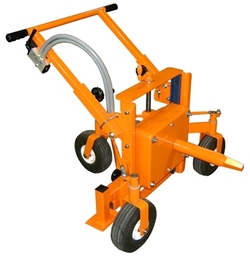
Railcar Opener Improves Unloading Efficiency at Cemex
A powerful pneumatic railcar opener has solved persistent work slowdowns caused by difficulty opening discharge gates, allowing the CEMEX Cement Terminal in Sacramento to maintain its aggressive schedule, while minimizing risk to personnel and damage to gates. The Martin® Railcar Opener improves unloading efficiency and speed, without gang tactics, stoop labor or excessive noise.
Read More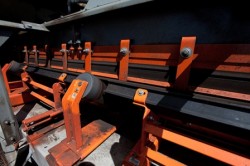
Redesigned Transfer Chutes and Load Zones Reduce Dust & Spillage at Westar Energy
Over time, operators at Westar Energy began to notice increased dust and spillage around four transfer points on four of its 42-inch conveyors. The problem was traced to worn chutes and skirtboard liners, which no longer contained the coal fines as they did when new. A worn-out skirtboard liner plate was found to be exacerbating the problem.
Read More
Rush Service Helps Izmir Cimentas Plant Meet Tight Outage Schedule
A leading Turkish cement producer has specified high-performance air cannons to replace an under-performing existing system, which was jeopardizing the plant’s output capacity by failing to remove accumulated material from the preheaters. The new air cannon network resolves build-up issues that required at least two hours’ maintenance each day, as well as a monthly slowdown for a major cleaning.
Read More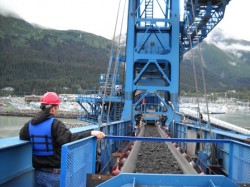
Ship Loader Conveyor Upgrade Positions Port of Seward For Growth In Coal Handling
The Port of Seward has completed a conveyor system upgrade for its coal handling operations that has raised throughput an estimated 20%, allowing Alaska’s largest coal producer to better compete for international customers. With throughput increased, ship-loading times are being reduced, driving down costs and making the exported coal more affordable to overseas customers.
Read More
Silo Cleaning Technology Keeps Material Flowing at Illinois Cement
Like most cement manufacturers, the plant uses large storage vessels to hold finished material until it’s ready for shipment. At the LaSalle facility, the domed storage unit is 99 feet tall and 186 feet in diameter, capable of holding about 80,000 tons of Type I cement. A reclaim screw conveyor (auger) is used to deliver material to a belt conveyor for load-out from a tunnel beneath the dome.
Read More
Stark Excavating Relieves Pressure With Silo Cleaning Service
Stark Excavating is one of the Midwest’s busiest construction firms. The complex includes three 125-ton storage silos. Over time, material dust in the three pneumatically-loaded silos began building up, first on walls and ridges and eventually clinging to all the interior surfaces. As a result, the air flow became constricted, raising the pressure within the silos and exerting greater force on the structure, connections and piping.
Read More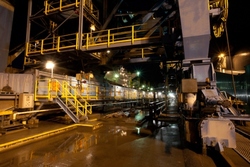
Transfer Chute Upgrades at Vancouver Wharves Raise Throughput, Prevent Fugitive Dust
Environmental stewardship as well as Safety and Quality are three of Kinder Morgan’s core principles. At the terminal all the minerals concentrate storage and handling facilities are fully enclosed to ensure no mineral concentrate escapes into the environment or migrates into the ocean. Kinder Morgan collects and treats all the water used at the terminal prior to discharge into the Burrard Inlet; which includes rainwater run-off.
Read More
Vibrator Enhances Dump Performance
Dump bodies from Towmaster Inc. feature the Cougar® DC-3200 12V Truck Vibrator from Martin Engineering. Located at the center front on the underside of the body, the vibrator delivers 4,000 cycles per minute with 3,200 pounds of force, releasing sticky materials and eliminating the need to raise the body to its steepest angle. This eliminates the need to get in the body of the truck and shovel out the corners.
Read More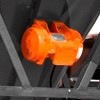
Truck Vibrators Help Eliminate Carryback
Martin Engineering has introduced a new line of truck vibrators. Martin’s Cougar® truck vibrators help drivers ensure complete emptying of bulk materials, reducing the need for personnel to enter dump beds for manual cleanout. Minimizing the need for people to climb into or out of a truck bed, helps to avoid the potential for injuries.
Read MoreWe're Here to Help
Toll-Free 800-544-2947
Martin Engineering
One Martin Place
Neponset, IL 61345-9766
Get Directions
info@martin-eng.com
309-852-2384